Most safety squat bars weigh roughly 45 to 70 lb, but there is no single standard SSB weight. The exact number depends on the model, so you should check the manufacturer before logging your squat weight.
The models in the comparison below range from about 40 to 70 lb. That spread is large enough that assuming your SSB is a standard 45 lb bar can throw off your training log.
Before You Buy Another Piece of Gym Equipment, Score It First.
Run the purchase through two hard stops and eight practical checks for space, training value, budget, overlap, and long-term usefulness.
How Much Does a Safety Squat Bar Weigh?
The weight of a safety squat bar can vary depending on its construction, materials used, and additional features.
Here is a table showing the most popular options currently available.
| Brand | Weight (lbs) | Weight (kg) |
|---|---|---|
| Power Lift | 70 | 31.75 |
| Rogue SB-1 | 70 | 32 |
| Marrs Bar | 65 | 29.48 |
| EliteFTS SS Yoke Bar | 65 | 30 |
| REP Fitness | 68 | 30.84 |
| Titan Fitness SSB | 61 | 28 |
| Gopher | 60 | 27 |
| Kabuki Transformer | 55 | 25 |
| Strength Shop Riot | 45 | 20.41 |
| Mirafit | 46 | 21 |
| Bells of Steel SS3 | 47.5 | 21.5 |
| Power Systems | 40 | 18.14 |
Based on this, we can see that there’s a range of weights between 40-70 lbs or 18-32kg. This is an average of around 58.54 lbs or 26.55kg.
So while it can weigh around the same as a typical barbell, on average it’s going to be a little beefier, which makes sense considering the added weight of the yoke.
RELATED
- The Ultimate Rogue vs EliteFTS Safety Squat Bar Showdown
- Marrs Bar vs Transformer Bar – The Ultimate Safety Squat Bar
- The Best Safety Squat Bar For Your Home Gym
- The 20+ Different Types Of Barbells & What They’re Used For
What is a Safety Squat Bar?
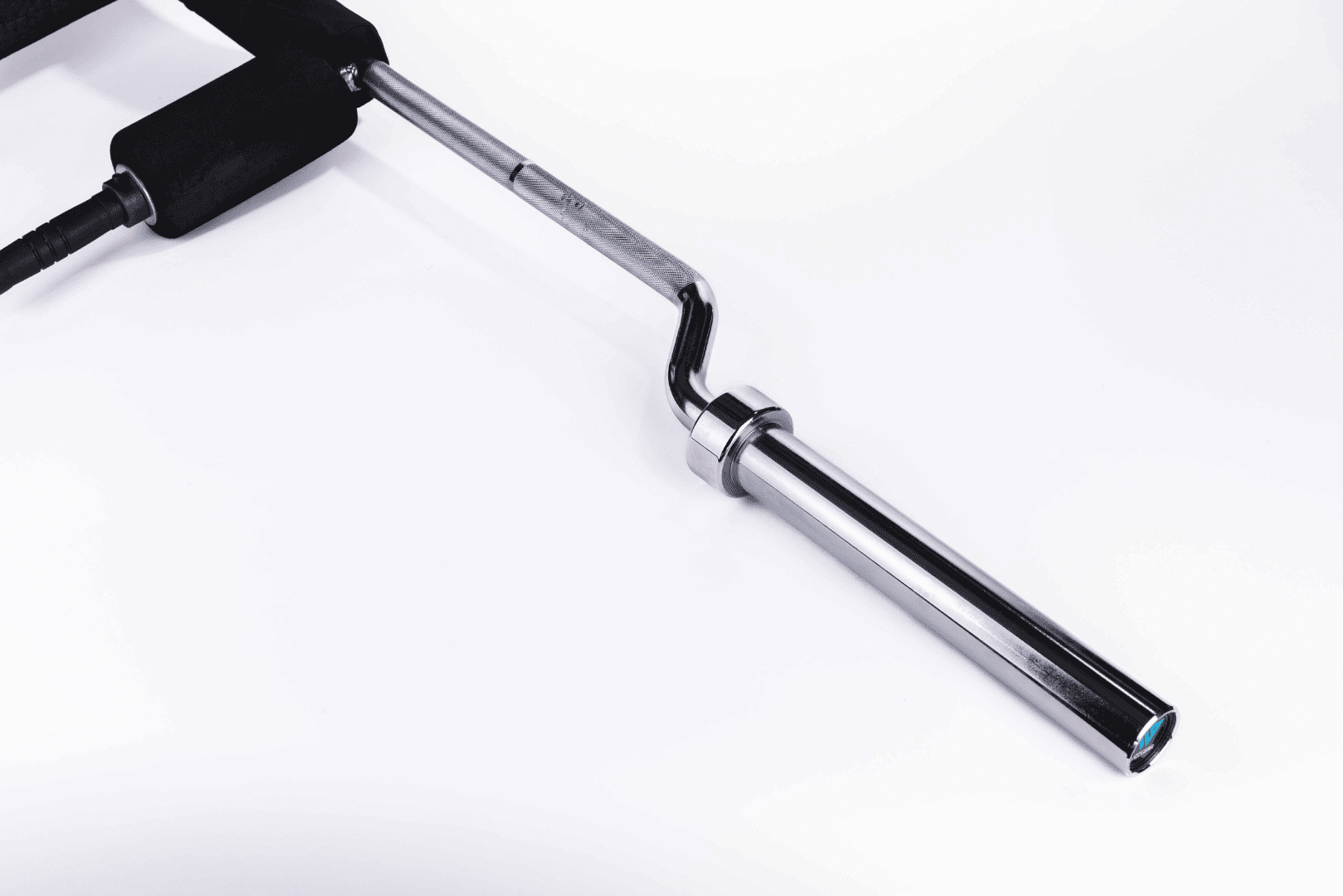
A safety squat bar is uniquely designed to enhance comfort and safety during squats. It’s a curved bar equipped with handles, enabling a more upright squat position. This setup is especially great for anyone dealing with shoulder, wrist, or elbow concerns, as it significantly reduces strain. Moreover, its design cleverly shifts the weight, putting more focus on your posterior chain.
The safety squat bar is just one of many specialized options. If you’re curious about exploring other types of specialty barbells and how they compare, this guide to the best specialty barbells is a must-read. And for anyone who’s ever ended a squat session with their back looking bruised, there are strategies to prevent the squat bar from leaving its mark, ensuring a more comfortable recovery after your workouts.
Safety Squat Bar Benefits
There are numerous benefits to using the safety squat bar in your training. Here’s what stands out:
- Improved Confidence in Lifting – This bar feels more secure, so you’re all in on the lift, not fretting over your balance.
- Shoulder-Friendly – Its design means less shoulder strain, a win for anyone with past injuries or who just hates the usual squat discomfort.
- A More Stable High-Bar Position – It promotes a high-bar position, which will keep your torso upright and reduce forward lean.
- Increased Emphasis on the Upper Back and Abs – It puts more work on your upper back and abs, strengthening core stability. This is part of why it feels harder than a typical barbell squat.
- Improvement In Strength To Stabilizers – Challenges those key balance and stability muscles in fresh ways.
- Greater Range of Motion – Allows for deeper squats, boosting flexibility and strength.
For those eager to understand more about the safety squat bar and its advantages, here’s a piece that breaks it down.
Conclusion
Now I turn it over to you! Did this piece clear up the average weight of a safety squat bar for you? Let me know in the comment section below, right now!
Until next time,
-Dante
Buy It, Wait, or Skip It?
Use the same simple scorecard for racks, barbells, benches, dumbbells, machines, attachments, and accessories before they take your money and floor space.
Score My Next Purchase →


0 Comments
Sort by