
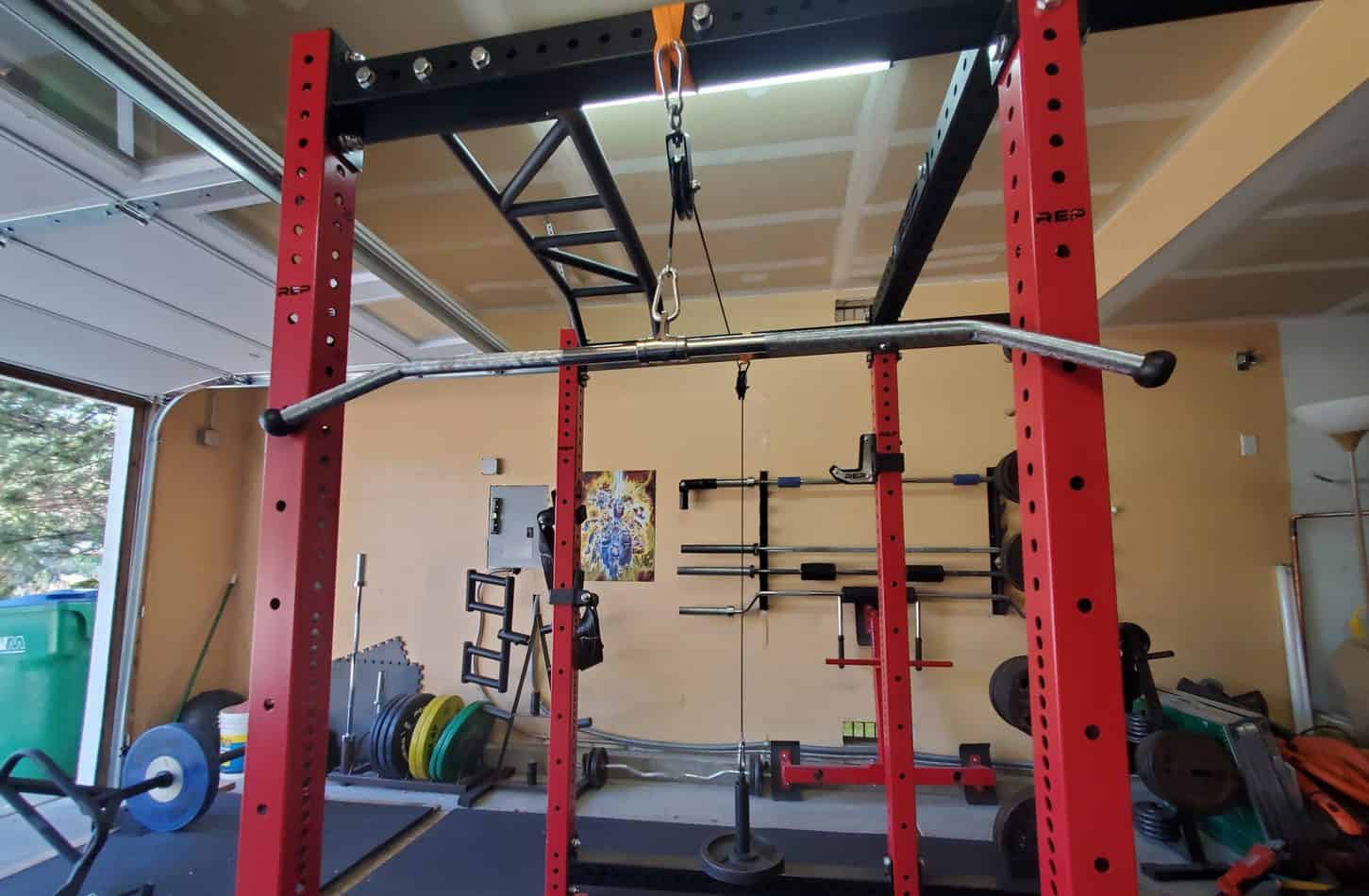
Today, I’m walking you through crafting a top-notch DIY Cable Pulley System for your home gym.
You’ve probably seen a bunch of setups out there, from the overly complex to the too-simple-to-bother.
But here’s the deal: I’ll guide you in building something that’s not just wallet-friendly, but also amps up your training efficiency.
Let’s get started!
Before You Buy Another Piece of Gym Equipment, Score It First.
Run the purchase through two hard stops and eight practical checks for space, training value, budget, overlap, and long-term usefulness.
Key Takeaways
| Key Point | Details |
| DIY Benefits | Cost-effective, enhances training efficiency in home gyms. |
| Material Selection | Carabiners, nylon gym cable pulleys, sheathed cables, soft loop tie-down straps, steel loading pin. |
| Rack Requirement | A 4-post power rack or 2-post setup is necessary for attachment. |
| Versatility | Allows for various attachments and adjustments for a range of exercises. |
List Of Materials You’ll Need
I’ll be going over how to make a homemade lat pulldown machine so you can do all of the best pulley exercises in your gym.
The ones that I recommend will be a lot better than buying some stuff at Home Depot that you manually have to put together.
I’ve used those solutions, and they never last, trust me! I’ll go over why later on in this guide.
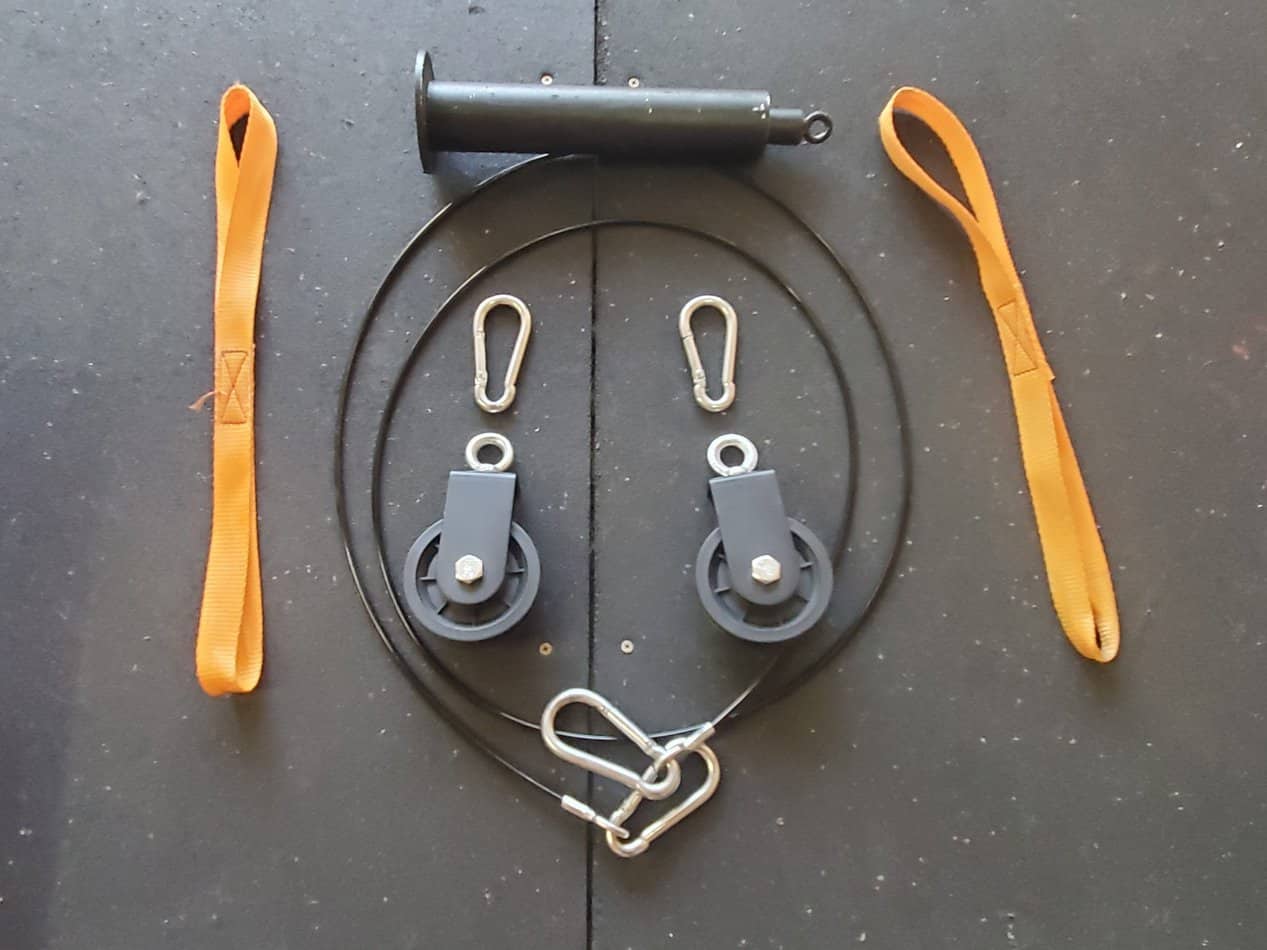
All of the materials I recommend are available on Amazon, you’ll have to determine which cables work best for your garage gym setup, but beyond that, it’s pretty easy to figure out.
Carabiners
The first thing you’re going to need is some carabiners to attach your pulleys to whatever setup you have.
The ones I’m linking to support up to 460 lbs which should be more than enough for all cable exercises.
You don’t have to get these but whatever you choose, make sure they have a strong weight capacity as this is usually going to be the weakest link.
Pulleys
For the pulleys, I’ve seen a lot of people recommend metal pulleys with smaller wheels. I know firsthand that these aren’t a solid choice whatsoever which I’ll cover why later.
The ones that I do recommend are these smooth nylon gym cable pulleys from Amazon. They’re easily detachable, smooth, and the best part – SILENT.
This is a big deal if you plan on doing a bunch of cable exercises. The other thing that I love about these is that they don’t destroy your cable, which metal pulleys will over time. Trust me!
The one place you definitely don’t want to skimp on is the pulleys, as this determines how smooth your movements will be.
And I really can’t say it enough, the lack of squeaking will be a game-changer!
- Very quiet in use
- Smooth pulley action
- Nylon is gentler on cable than small metal pulleys
- Easy to detach
- 400 lb working-load rating covers typical cable exercises
- Works with common sheathed gym cable
- Not appropriate above its stated 400 lb working limit
- Cable size is limited to about 7 mm

Cables
The second most important thing you need to consider for your DIY pulley machine is the cables or wire rope you decide to use.
Most people are just buying steel wire cables with no sheath on the outside of them.
This plus metal pulleys are going to wear down quickly over time. That’s why these sheathed cables are such an awesome idea.
The strength, durability, and smoothness of these cables will be the perfect choice for a home gym.
These have a maximum weight capacity of 300 lbs, which should be perfectly fine for cable exercises. Plus, they’re super cheap so you’ll always have replacement pulleys for your gym.
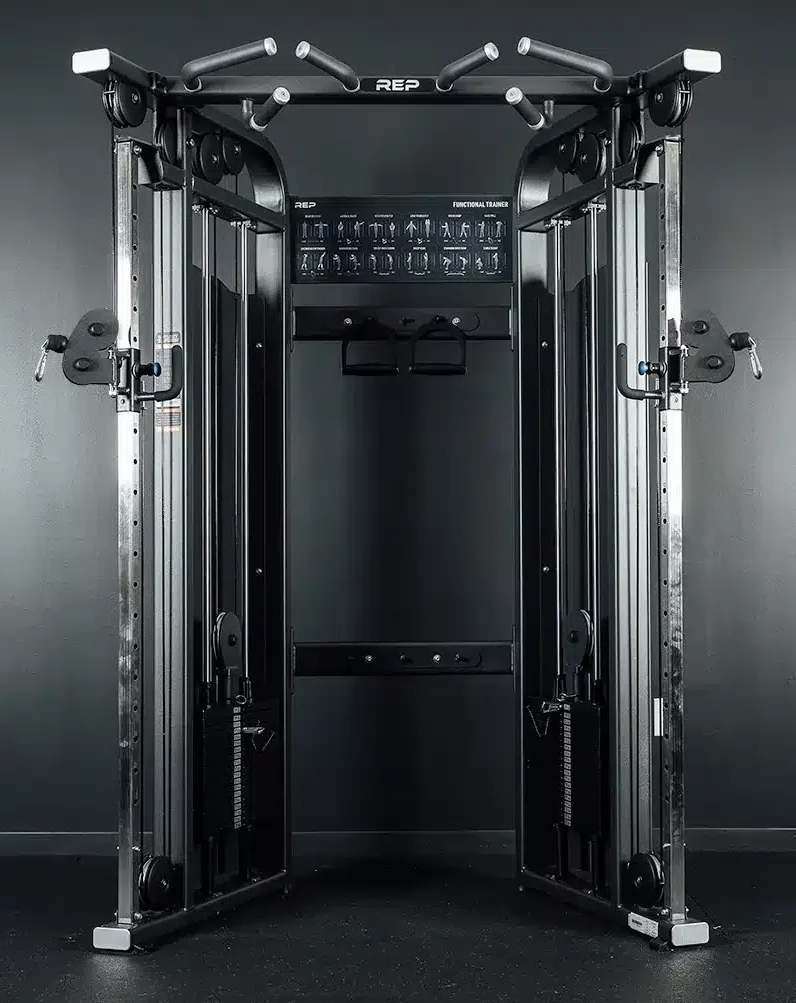
- Heavy dual 224 lb weight stacks
- 21 cable positions for a wide exercise range
- 11-gauge steel construction
- Aluminum pulleys and smooth cables
- Multiple pull-up grip options
- Updated design adds more weight and five more pulley positions
- Top trolley position can be awkward for taller users
- Pricey considering the limited included attachments
- 85.5" height may be short for users who want a taller unit
- 12.5 lb starting resistance is heavy for some lighter exercises
Soft Loop Tie-Down Straps.
You’ll need something to secure your pulleys to your squat rack or wherever you decide to set up your DIY cable pulley system.
The best thing I’ve found that gets the job done perfectly is these soft loop tie-down straps.
These are strong enough to tie down motorcycles, ATVs, and more!
So you know for a fact they’re going to be more than strong enough to hold a couple of hundred lbs of weight while you’re training.
They’re also really cheap as you can get a pack of 6 for like 9 bucks which is great!
- Very inexpensive
- Soft material is less likely to scratch equipment
- Double stitching adds durability
- No knots required
- High stated breaking capacity
- Breaking capacity is not the same as a gym working-load rating
- Generic cargo hardware rather than dedicated fitness equipment

Loading Pin
The final thing you will need for your DIY Pulldown, Low Pulley Cable Row, and overall cable pulley system is a loading pin.
Luckily, you can get them cheap, and they stand up straight while loading them. My issue with other loading pins like spud inc‘s. is the fact that it comes with a strap-loading pin.
It will hold a ton of weight fine, but loading more plates onto it can be a pain. From my experience, you should definitely just go with a steel loading pin as it’s easier to load.
Other than these basic materials, you’ll also need a 4-post power rack or 2 posts in your gym to attach everything to.
For most people with home gym equipment, a squat rack is something you’re going to need anyways.
How To Make Your Own Cable System
Now that we have the required materials assembled, we can start assembling our DIY cable system.
Luckily this is really easy and doesn’t require any experience whatsoever.
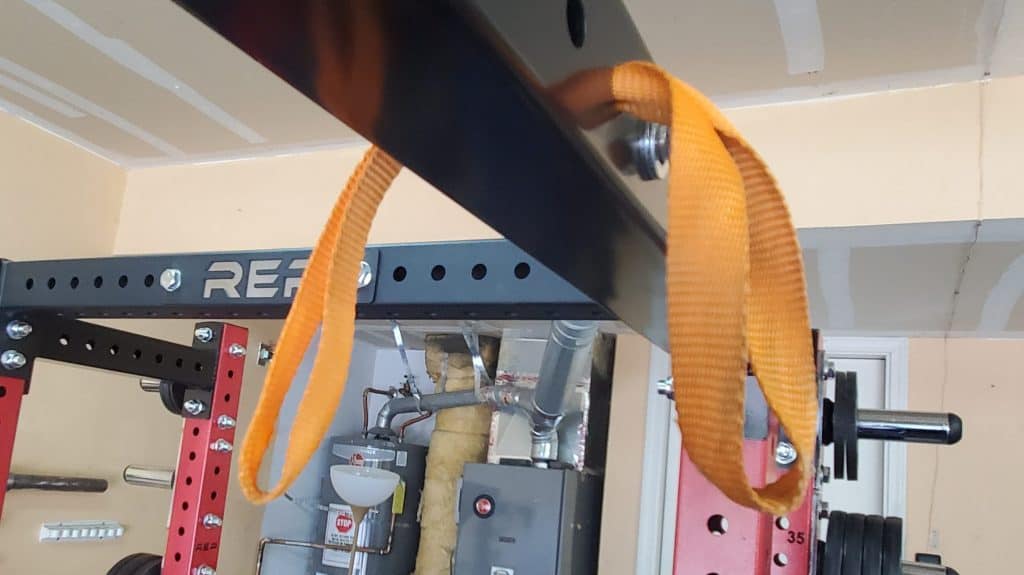
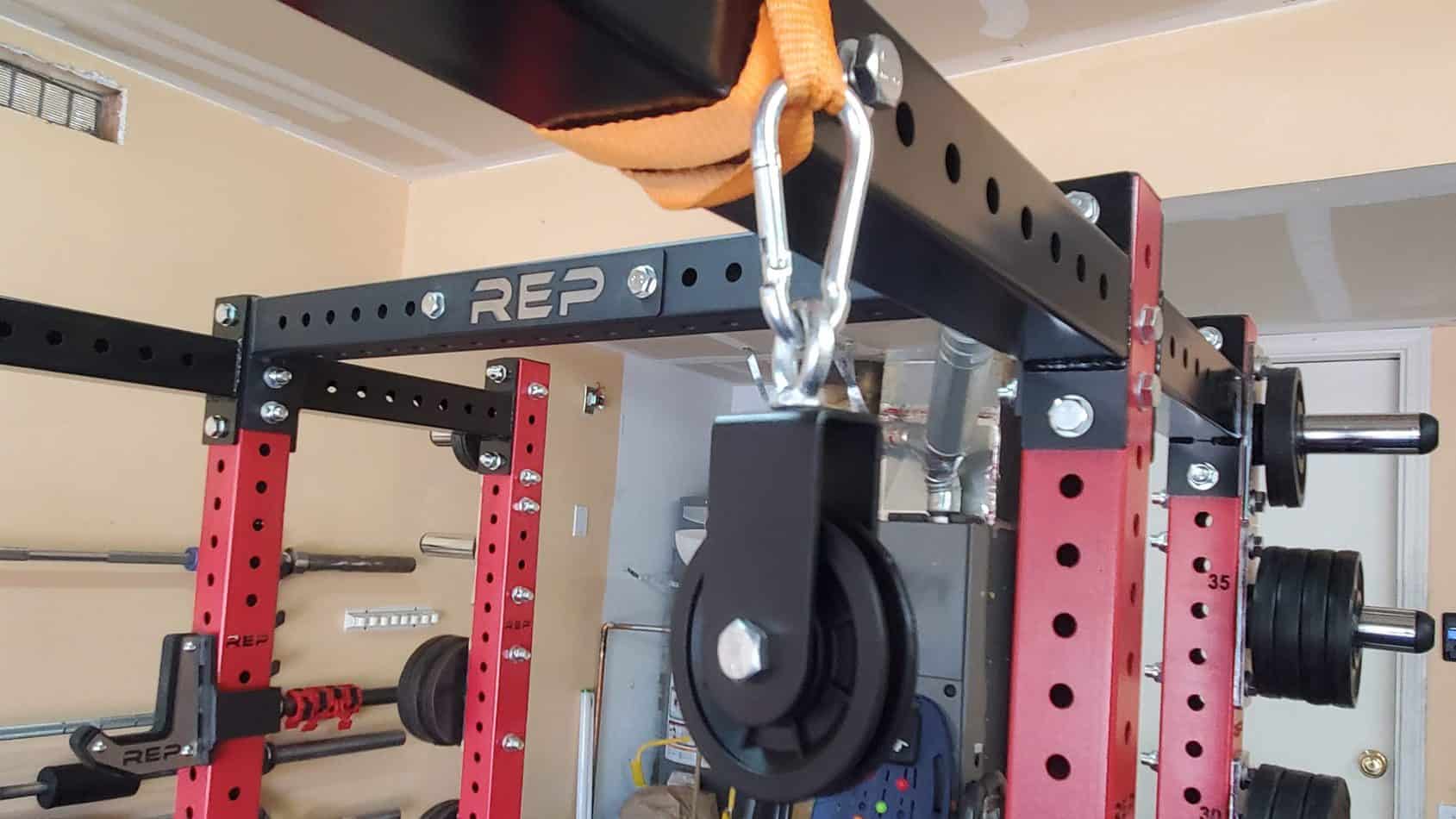
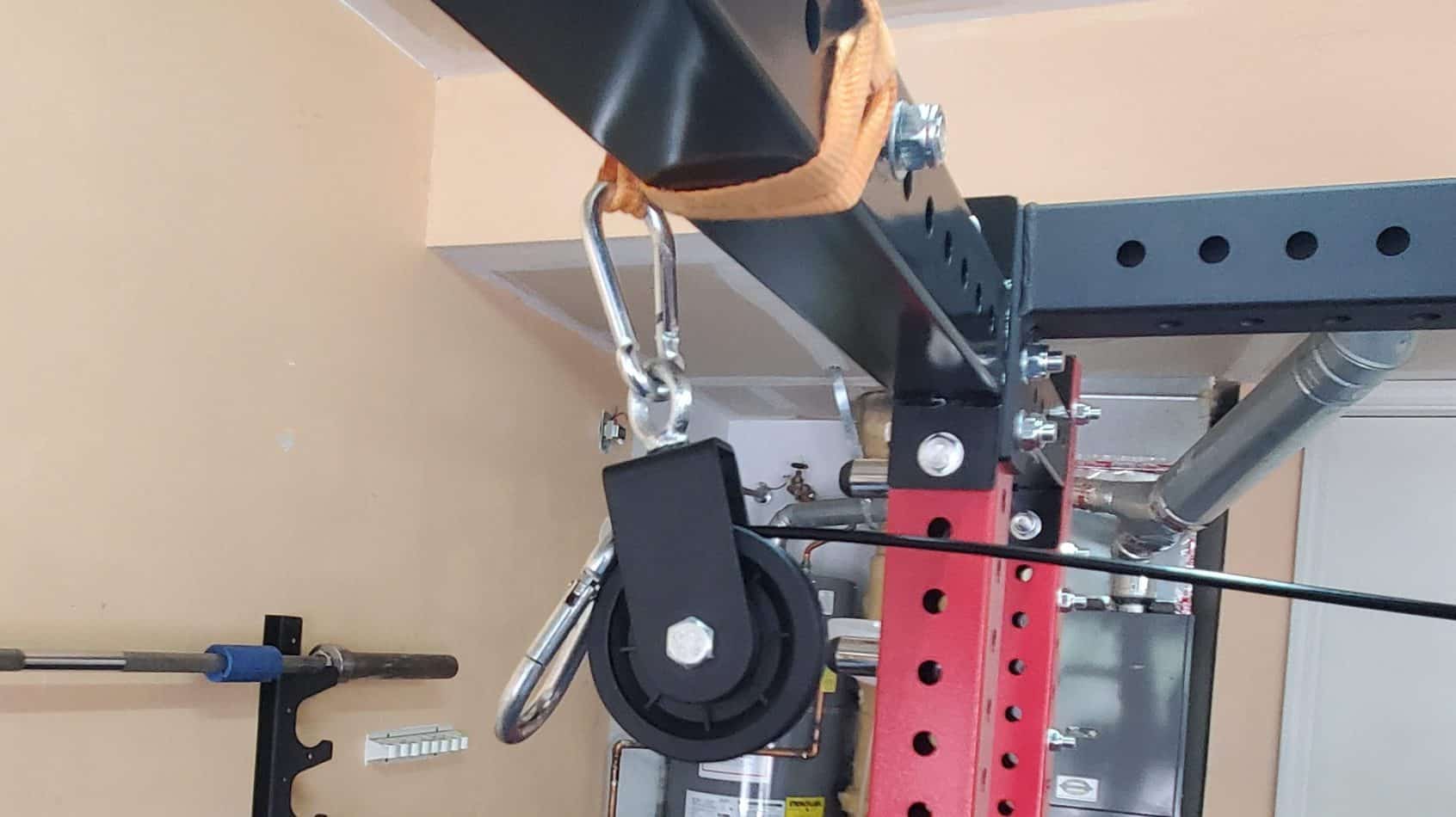
From here, you thread your cable through your first pulley…
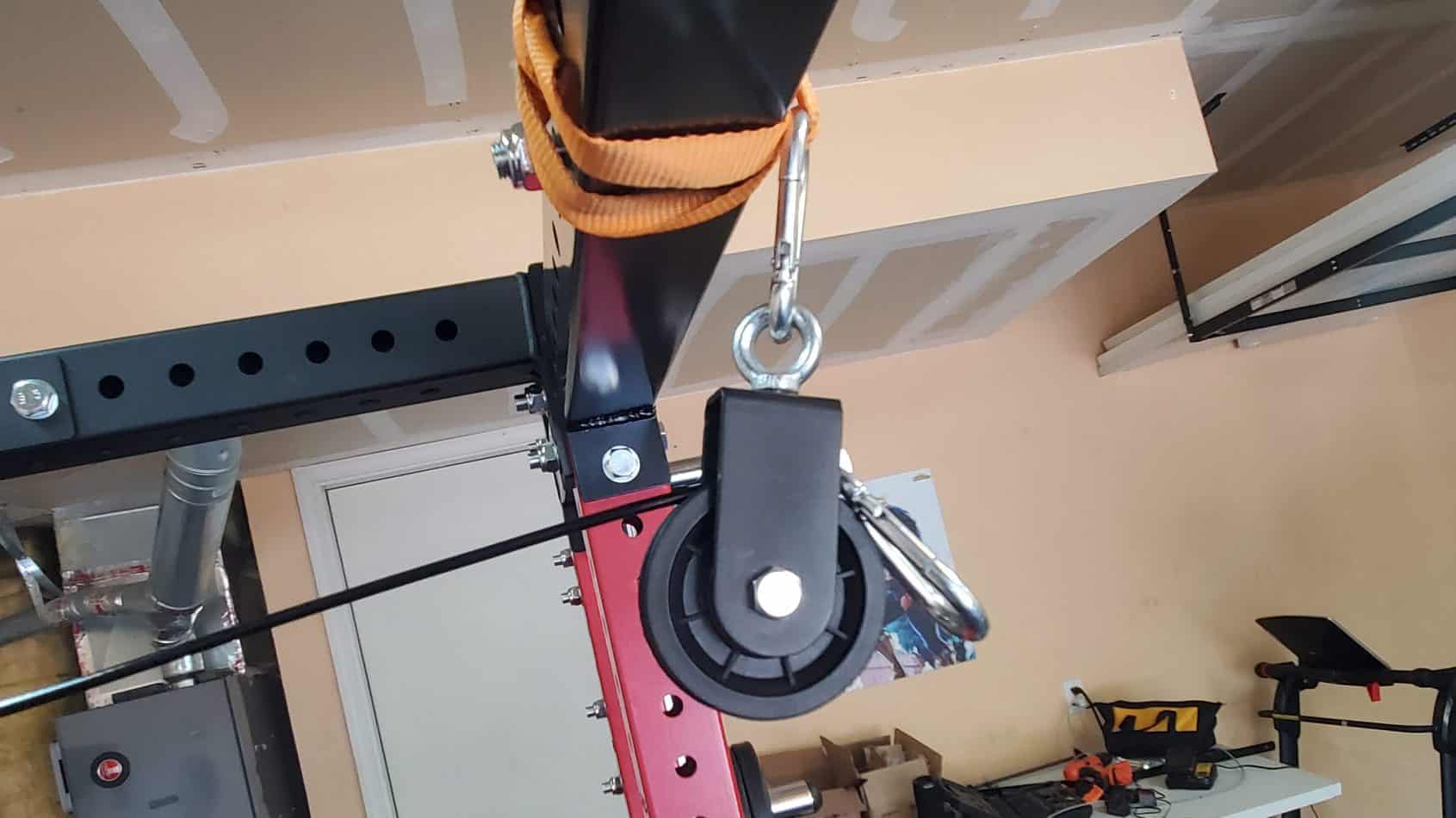
…and of course your second pulley.
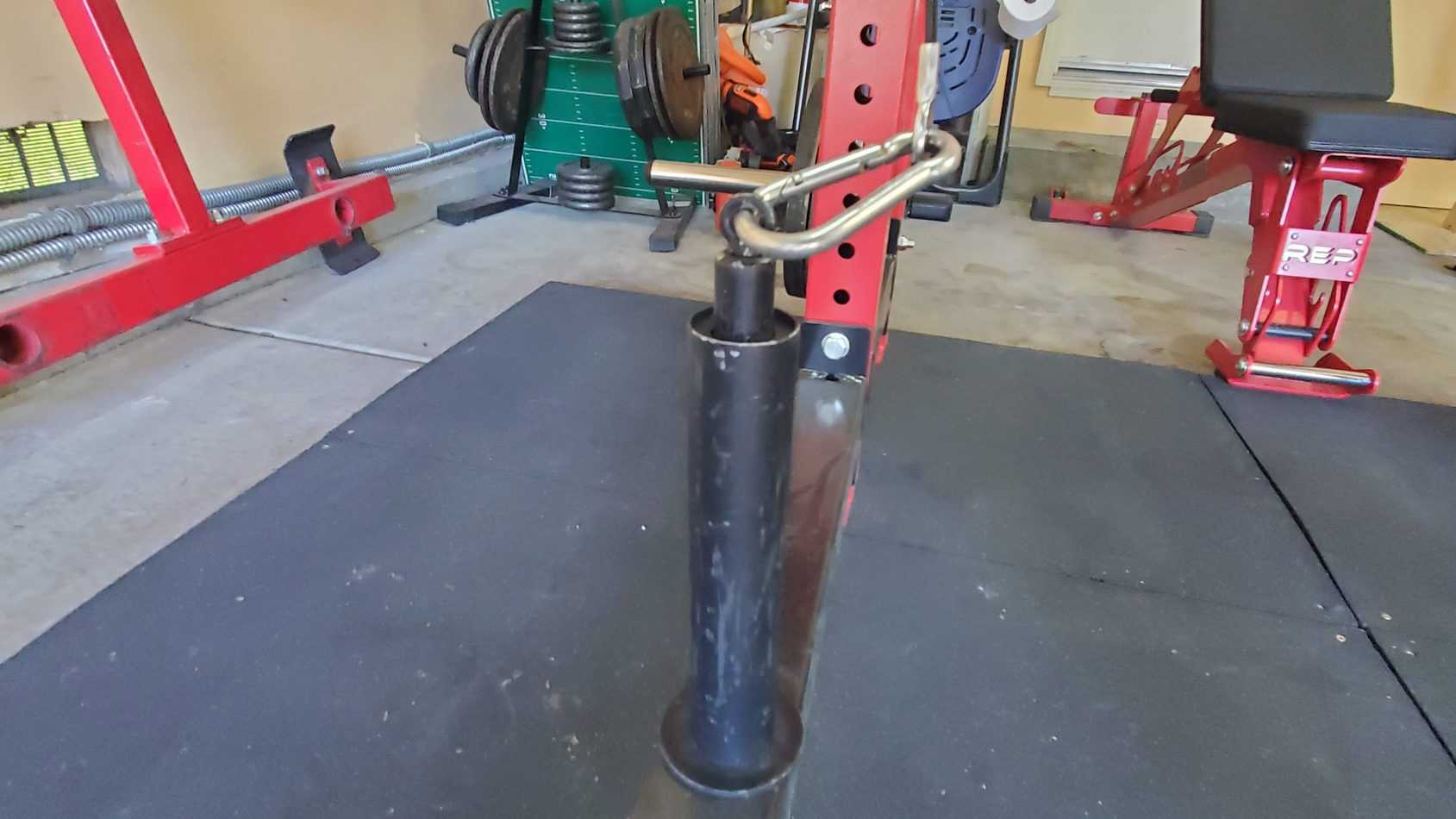
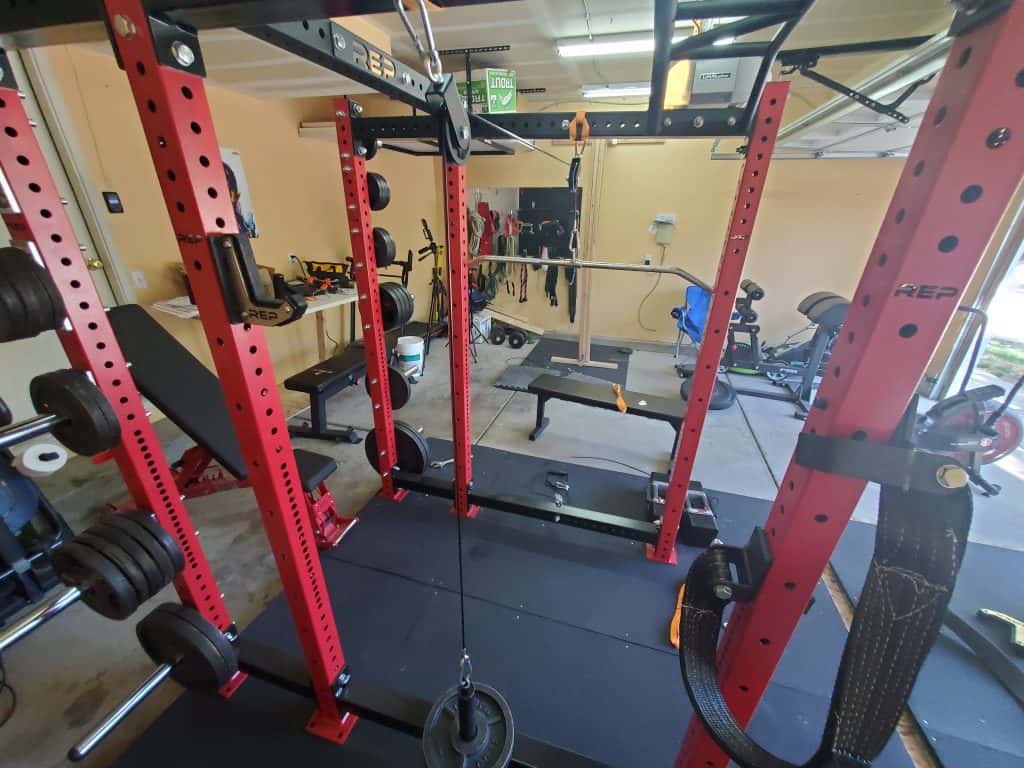
This is a very basic pulldown but it’s going to get the job done a lot better than other products on the market.
The other thing you can do, which I definitely recommend, is to use your safeties to keep your legs braced while doing your heavy pulldown movements.
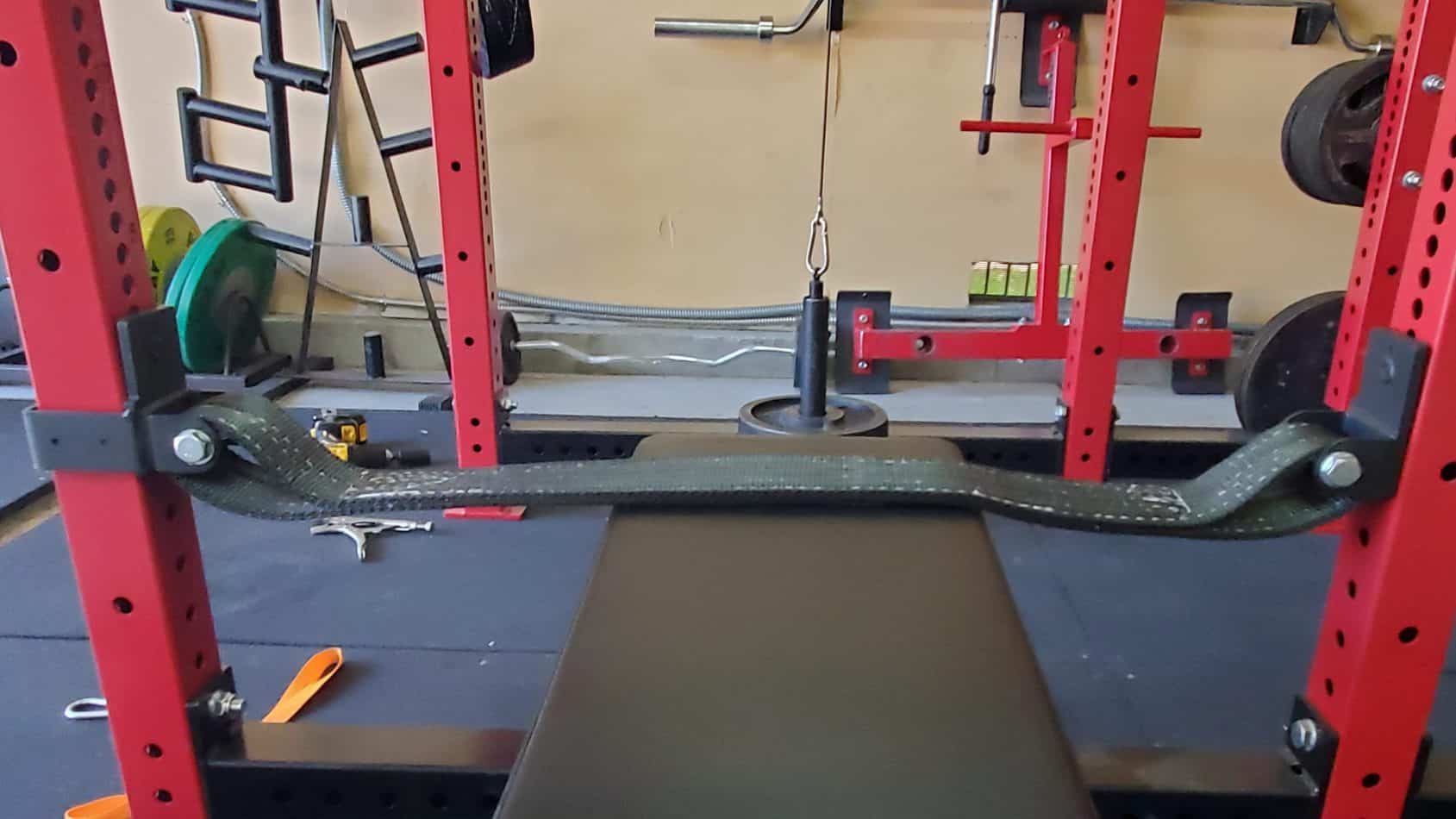
You can also add in another pulley under your bottom cross member or even your safety so you can choose the height of your exercises.
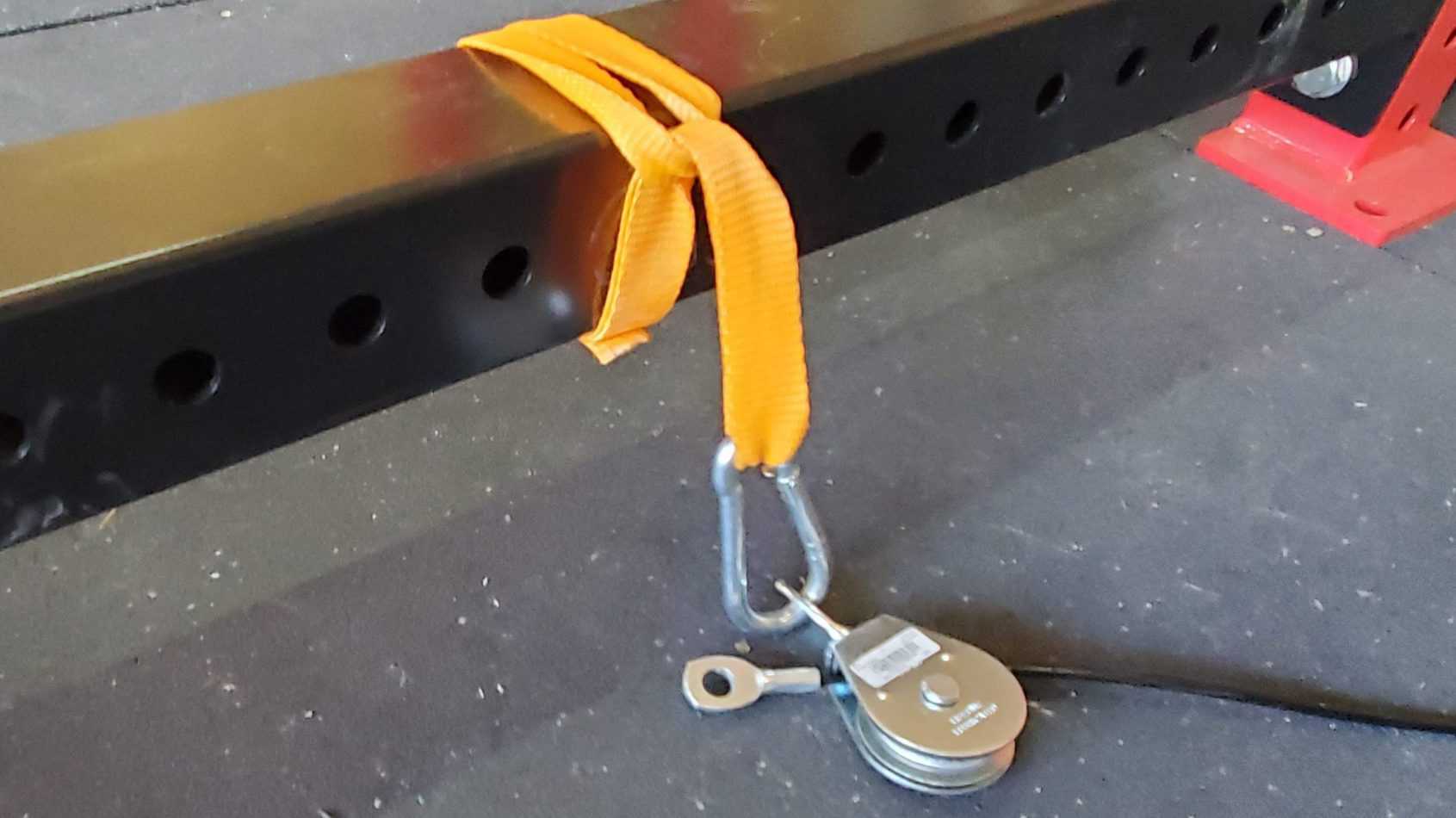
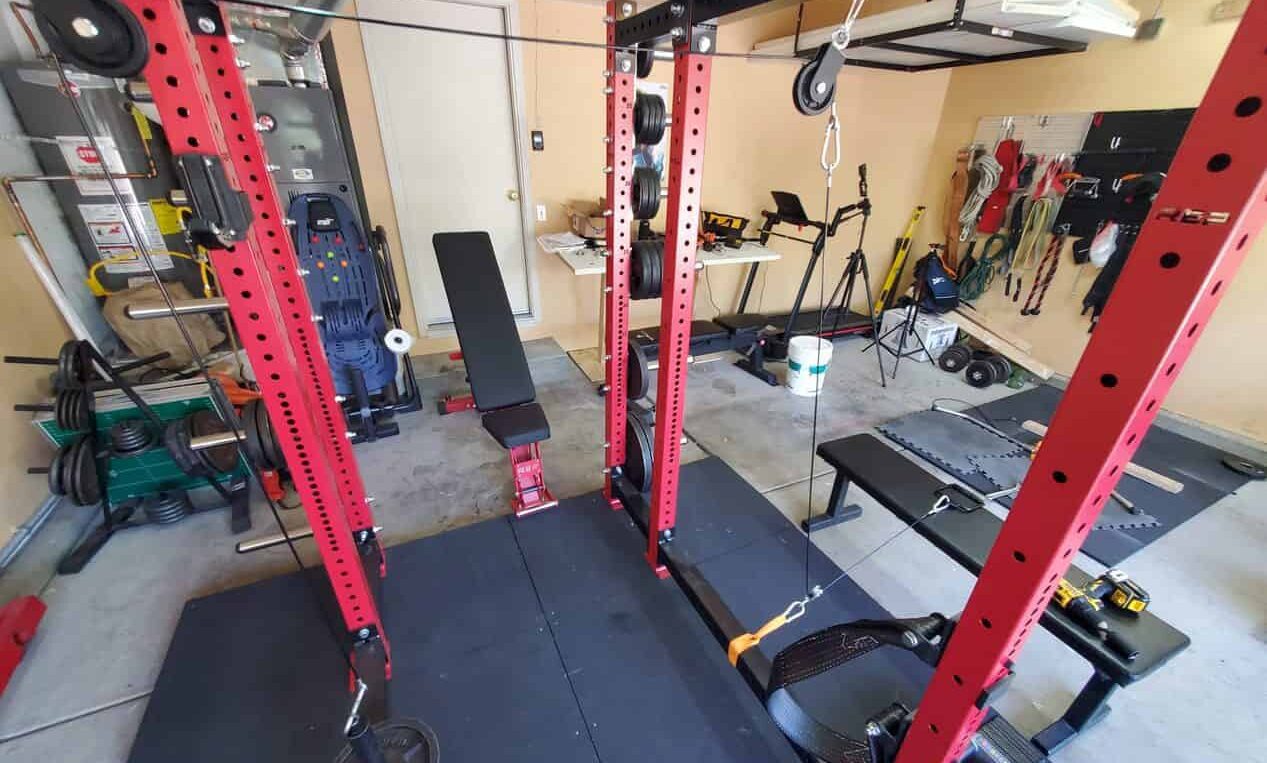
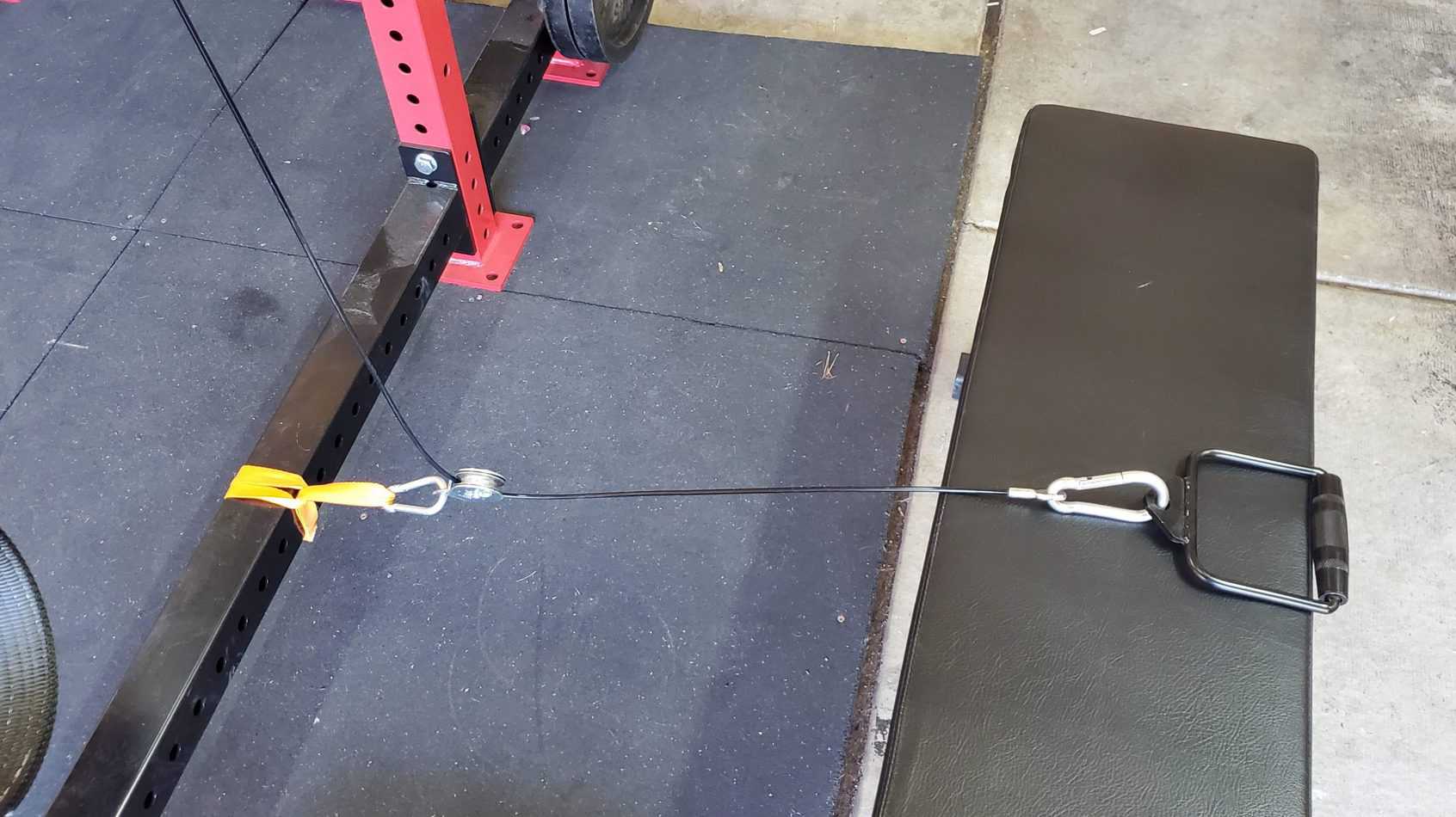
I recommend you buy different cable lengths as they will come in handy as you can adjust everything correctly based on what exercises you’re doing.
You can even load this with cables on the end potentially for a portable cable pulley system on the go.
If you’re doing pulldowns, you want to make sure you stretch as far as you can for a full range of motion.
If you’re just lowering halfway and the weight already touches the ground, that isn’t really a full ROM.
I use this myself for cable preacher curls, leg extensions/curls, and a whole host of different cable row variations.
Conclusion
Crafting your own cable pulley system is a solid choice for your home gym. It’s budget-friendly and totally customizable to your workout needs.
The key? Pick sturdy, smooth-operating materials. And remember, it’s not just about building muscle; it’s about building something you can be proud of.
Catch you next time – keep pushing and stay sharp!
Until next time,
-Dante
Buy It, Wait, or Skip It?
Use the same simple scorecard for racks, barbells, benches, dumbbells, machines, attachments, and accessories before they take your money and floor space.
Score My Next Purchase →

0 Comments
Sort by